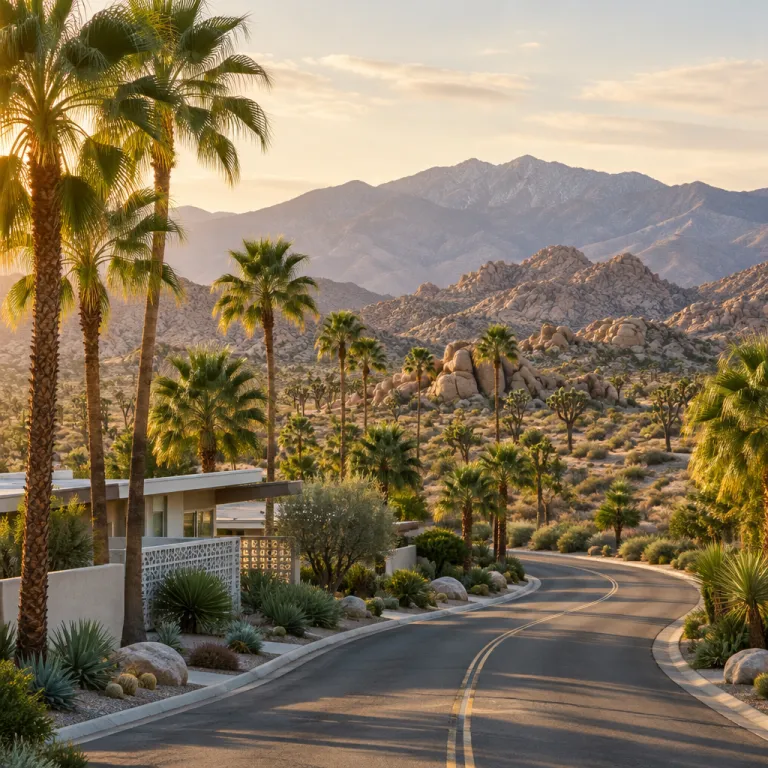
How to plan an elegant 2 day itinerary to visit Palm Springs and Joshua Tree
Designing an itinerary to visit Palm Springs and Joshua Tree in 2 days starts with choosing the right hotel base in town. Your Palm Springs stay should balance poolside calm, easy access to the national park, and proximity to dining in the valley so that every day of your trip feels seamless rather than rushed. With only two days Joshua Tree and Palm Springs reward careful planning of driving time, hiking choices, and where you return to sleep each night.
Most travellers arrive from Los Angeles by car, covering roughly 170 kilometres through the desert. This drive sets the tone for your tree itinerary because you move from coastal sprawl into the open Coachella Valley, where the rock formations and distant mountains begin to hint at the landscapes inside Joshua Tree National Park. If you plan to spend days exploring both the city and the park, aim to reach your Palm Springs hotel by early afternoon to enjoy the pool and adjust to the dry air.
When you visit for only one day in the park, you must prioritise a compact loop of highlights. A refined itinerary to visit Palm Springs and Joshua Tree in 2 days usually dedicates the first day to Palm Springs itself and the second day to the national park, but some guests reverse this order depending on the best time for their flights. Either way, your hotel in Palm Springs becomes the anchor that lets you move between urban comforts, desert hiking, and the quiet rock landscapes of Joshua Tree without wasting precious hours.
Where to stay in Palm Springs for a flawless Joshua Tree day
Your choice of hotel in Palm Springs shapes how relaxed your Joshua Tree day will feel. Look for a property near Highway 111 or the main freeway so that your morning drive towards the national park remains under 1 hour and you can reach the park entrance with minimal stress. A well located Palm Springs hotel also lets you return quickly after sunset, when you are tired from hiking and ready for water, dinner, and a quiet evening by the pool.
For guests arriving through Palm Springs International Airport, car hire is almost essential for this itinerary to visit Palm Springs and Joshua Tree in 2 days. The desert distances are measured in miles and kilometres rather than city blocks, and airport car rentals strongly influence how flexible your hotel stay feels during the trip. To understand how vehicle choice affects your comfort and timing, study this guide on how Palm Springs Airport car rentals shape your hotel stay before you book.
Many travellers prefer to stay in the central Palm Springs area, close to restaurants and mid century architecture. This location keeps you near the Palm Springs Aerial Tramway, golf courses, and spa options, while still allowing an early start for your national park day when you drive towards Twentynine Palms or the West Entrance. When you compare hotels, pay attention to parking, early breakfast times, and whether the pool area offers shade, because these details matter after a long day among the rocks and trees.
Day 1 in Palm Springs: pools, mid century style, and desert light
The first day of your itinerary to visit Palm Springs and Joshua Tree in 2 days should ease you into the desert climate. Start with a slow breakfast at your Palm Springs hotel, then walk or cycle through the historic neighbourhoods where palm trees frame low slung houses and the mountains rise sharply behind the valley. This is also the best time to photograph the area before the light becomes harsh and the temperature climbs.
Late morning, many guests head for the Palm Springs Aerial Tramway to gain altitude and cooler air. The ride takes you from the desert floor to the upper mountain station in around 10 minutes, where short hiking trails through the forest contrast with the cactus garden landscapes you will see near Joshua Tree National Park the next day. If you prefer to stay in town, you can spend days exploring design shops, art galleries, and shaded patios that offer cold water and refined lunches.
Afternoons in Palm Springs are made for the pool, especially when you plan an active national park trip the following day. Choose a lounger with partial shade, drink plenty of water, and allow your body to adjust to the dry heat so that your hiking in Joshua Tree feels easier. To stretch your budget without sacrificing comfort, consider the ideas in this guide on how free experiences in Palm Springs shape the best hotel stays, which highlights complimentary activities that pair well with a relaxed first day.
Day 2 in Joshua Tree National Park: a refined loop of highlights
The second day of your itinerary to visit Palm Springs and Joshua Tree in 2 days focuses on the national park itself. Leave Palm Springs early, ideally before sunrise, so that you reach the West Entrance near Joshua Tree town or the entrance near Twentynine Palms while the air is still cool. This timing gives you the best time window for hiking, photography, and quiet moments among the rock formations before the main crowds arrive.
A classic loop for one day in Joshua Tree National Park starts with Hidden Valley, a short trail of around 1.6 kilometres that winds between rounded rock walls and scattered Joshua trees. From there, you can continue by car for a few miles to Barker Dam, where another gentle trail leads past boulders, petroglyphs, and a small water reservoir that sometimes reflects the surrounding rock. These two walks introduce the essence of the park area without exhausting you, leaving energy for more ambitious options such as Ryan Mountain later in the day.
Midday light can be harsh, so many travellers use this time to drive the main park road and stop at viewpoints. You might pause at Skull Rock, where a natural hollow in the stone resembles an eye socket, then continue towards the cholla cactus garden, a dense patch of spiny plants that glow in low sun. If you still feel strong, consider a late afternoon ascent of Ryan Mountain, a 4.8 kilometre return trail that rewards you with sweeping views across the valley and the scattered trees.
Key stops, short trails, and how to pace your national park day
With only one day in the park, pacing is everything. Think of your Joshua Tree National Park visit as a series of short, carefully chosen trails and scenic stops rather than a single long hike, because this approach lets you experience varied landscapes without rushing. The aim is to spend days Joshua Tree style, moving between rock gardens, tree clusters, and viewpoints while always keeping an eye on time, water, and energy.
From Hidden Valley, drive a few miles to Hall of Horrors, a cluster of rock formations popular with climbers and photographers. A short loop trail here lets you wander between narrow passages and rounded boulders, and some visitors search for the informal Heart Rock shape hidden among the stones, though it is not an official landmark. Continuing along the road, Arch Rock offers another gentle walk through a field of granite to a graceful stone arch that frames the sky and surrounding area.
Families or less experienced hikers often prefer to keep each trail under 3 to 4 kilometres. In that case, you can design a tree itinerary that links Hidden Valley, Barker Dam, Skull Rock, and the cholla cactus garden into a relaxed circuit, with plenty of stops for water and shade. More ambitious guests might add Ryan Mountain to the trip, but should always respect the heat, carry more water than they expect to need, and allow extra time for the return drive to their Palm Springs hotel.
Linking Palm Springs style with Joshua Tree wilderness on a short trip
The charm of an itinerary to visit Palm Springs and Joshua Tree in 2 days lies in the contrast between refined hotels and raw desert. In Palm Springs you sleep among palm trees, curated interiors, and shimmering pools, while in Joshua Tree National Park you walk between twisted trees, bare rock, and wide valley views that feel almost lunar. This duality is what makes a short trip so memorable, especially when your hotel becomes a calm retreat after the intensity of the national park.
Many travellers choose to spend days in Palm Springs before or after their park visit, using the city as a base for wider Coachella Valley exploration. From here, you can plan side trips to nearby resort towns, golf courses, and spa complexes, or even a longer drive back towards Los Angeles if your itinerary continues along the coast. If you are interested in architecture and celebrity culture, this guide to where to stay in Palm Springs for effortless access to celebrity homes can help you align your hotel choice with your cultural interests.
When you plan your nights, remember that the best hotels for a Palm Springs and Joshua Tree trip offer generous check out times, reliable air conditioning, and quiet rooms. These details matter after a long national park day when you return dusty, sun tired, and ready for a cool shower and stillness rather than noise. By aligning your accommodation, driving plan, and chosen trails, you create a balanced experience where every mile driven and every hour spent in the desert feels intentional and rewarding.
Practical tips for timing, safety, and making the most of 2 days
Timing is the backbone of any itinerary to visit Palm Springs and Joshua Tree in 2 days. Aim to arrive in Palm Springs by early afternoon on your first day so that you can rest, hydrate, and adjust to the dry air before your national park excursion. The best time to enter Joshua Tree National Park the next morning is shortly after sunrise, when temperatures are lower and wildlife is more active.
Always carry more water than you think you will need, especially on trails like Ryan Mountain where shade is limited and the ascent feels steeper in the heat. For shorter walks such as Hidden Valley, Barker Dam, Skull Rock, and Arch Rock, at least 2 litres per person is sensible, while longer hikes may require more depending on the season and your pace. Check the official national park website before your trip for any area closures, weather alerts, or trail advisories that could affect your plans.
Finally, remember that distances in the desert can be deceptive, both in kilometres and in miles. A rock formation that looks close may require a longer trail than expected, and driving between Palm Springs, Joshua Tree town, and Twentynine Palms can take more time than a map suggests once you factor in stops. Build generous margins into your schedule so that your two days feel spacious rather than rushed, and you return to your Palm Springs hotel each evening with a sense of calm satisfaction.
Key figures for a 2 day Palm Springs and Joshua Tree escape
- Joshua Tree National Park covers more than 3 200 square kilometres, which makes it larger than the entire area of Luxembourg and explains why a focused one day itinerary can only sample key highlights (source : U.S. National Park Service).
- The driving distance from central Los Angeles to Palm Springs is roughly 170 kilometres, and most travellers complete the trip in around 2 to 2.5 hours depending on traffic (source : California Department of Transportation).
- From Palm Springs to the West Entrance of Joshua Tree National Park near Joshua Tree town is approximately 80 kilometres, which usually takes 50 to 60 minutes by car in normal conditions (source : Google Maps driving data).
- Hidden Valley, Barker Dam, Skull Rock, and Arch Rock each offer trails under 3 kilometres, allowing visitors to combine several short walks into a single day without exceeding 10 kilometres of total hiking (source : U.S. National Park Service trail descriptions).
- Ryan Mountain rises to about 1 664 metres above sea level, and its 4.8 kilometre return trail gains roughly 320 metres in elevation, making it a moderate but rewarding half day hike for reasonably fit visitors (source : U.S. National Park Service).
FAQ about a 2 day Palm Springs and Joshua Tree itinerary
Is one day enough to see Joshua Tree National Park from Palm Springs ?
One day is enough to experience several highlights of Joshua Tree National Park from a Palm Springs base, provided you start early and focus on a compact loop. Most visitors can comfortably fit Hidden Valley, Barker Dam, Skull Rock, and the cholla cactus garden into a single day with time for scenic stops. Longer hikes such as Ryan Mountain are possible, but you should then reduce the number of other trails to avoid fatigue.
Do I need a car for a 2 day Palm Springs and Joshua Tree trip ?
A car is strongly recommended for this itinerary because public transport between Palm Springs and Joshua Tree National Park is extremely limited. Driving allows you to control your arrival time at the park entrances, adjust your route if an area is crowded, and return to your hotel after sunset without stress. Rental cars from Palm Springs International Airport or Los Angeles give you the flexibility to adapt your plans to weather and energy levels.
What is the best time of year for this 2 day itinerary ?
The most comfortable seasons for a combined Palm Springs and Joshua Tree trip are generally spring and late autumn, when daytime temperatures are milder. Summer can be extremely hot in both the valley and the national park, which limits safe hiking hours to early morning and late afternoon. Winter offers cooler air and clear light, but you should check forecasts for occasional cold nights and higher elevation chill.
Which Palm Springs area is most convenient for visiting Joshua Tree ?
Staying in central Palm Springs or along Highway 111 usually offers the best balance between city amenities and quick access to the freeway towards Joshua Tree. These areas provide a wide range of hotels, restaurants, and services while keeping your drive to the park entrances under about 1 hour in normal traffic. Guests who prioritise very early starts sometimes choose accommodation slightly closer to the freeway to save a few minutes each way.
How many kilometres of hiking should I plan in one Joshua Tree day ?
Most visitors feel comfortable with 6 to 10 kilometres of total hiking in Joshua Tree National Park during a single day, especially in warmer months. Combining several short trails such as Hidden Valley, Barker Dam, Skull Rock, and Arch Rock allows you to experience varied scenery without overexertion. If you add a more demanding route like Ryan Mountain, consider dropping one or two shorter walks to keep the overall distance manageable.